
Utah County Scheduled Versus Actual Release
A projected date is an estimate or ordered future event. An actual release date records a completed departure. They may match, but they answer different questions. For a person awaiting trial at the Utah County Jail / County Security Center, there may be no sentence-based date at all. Release can depend on bail, recognizance, dismissal, a court order, or resolution of another hold.
A county sentence creates a firmer starting point, yet the commitment, credit for time served, administered good time, court changes, and holds can still affect the exit. State prison works differently. Utah uses indeterminate sentencing within legal and court terms, and the Board of Pardons and Parole controls parole decisions within its authority. Eligibility is not release, and a hearing is not a release order.
A person can also leave one facility without entering the community. Utah County codes such as USP, INS, USH, or OTH indicate transfer to another custodian or institution. That county departure date is not a final discharge date.
Find a Utah County Projected Date
Start with the person, case, and custodian. The Utah County Sheriff search and UDC search cover different populations. A missing county result does not send every person to UDC, and a UDC result does not prove community release. Follow the record trail that matches the sentence.
- Check the Utah County Sheriff inmate search for a local booking. Read status, release date, and release type, not merely roster presence.
- For a pretrial detainee, inspect the court docket for bail or a release order. Call the jail information path at 801-851-4200 because the Sheriff may have no fixed date to publish.
- For a county sentence, use the commitment, credit for time served, and current jail calculation. Booking staff state that they cannot calculate good time on demand.
- If the county record says USP, move to the Utah Department of Corrections system. Search by name or offender number and open More Information.
- Record UDC's exact Release Date/Type, Location, Housing Facility, and case-manager fields. Then obtain the latest Board decision or order and read its effective date.
- When no public result resolves the issue, request a releasable record from the Sheriff or UDC and identify the booking, offender number, case, and date range.
A complete Utah County released-person search and county records path appears on the Utah County released inmates page. That county route is useful when the question concerns a completed jail departure rather than a future state-prison date.
Utah County UDC Release Date Field
The public UDC Offender Search is limited to people currently under UDC supervision. That includes people still incarcerated and can include parolees who have left prison. It excludes people awaiting trial or not yet sentenced in a county jail. A fully discharged former offender may no longer appear.
The initial result lists offender number, name, date of birth, and a More Information action. Expanded details show Offender #, Name, Location, Housing Facility, Release Date/Type, Case Manager, and Case Manager Email. The public interface has no separately labeled Projected Release Date, Tentative Release Date, or Earliest Release field. Release Date/Type is the exact label, and its meaning must be read with the type, location, status, and Board order.
| UDC field | How it helps |
|---|---|
| Offender # and Name | Distinguish the correct person and support a records request. |
| Location | Shows the reported supervision or custody location. |
| Housing Facility | Helps separate prison custody from a community setting. |
| Release Date/Type | Provides the displayed date and event label, which may require Board confirmation. |
| Case Manager | Identifies the most specific UDC contact shown on the result. |
The official UDC search interface documents its current-supervision scope.
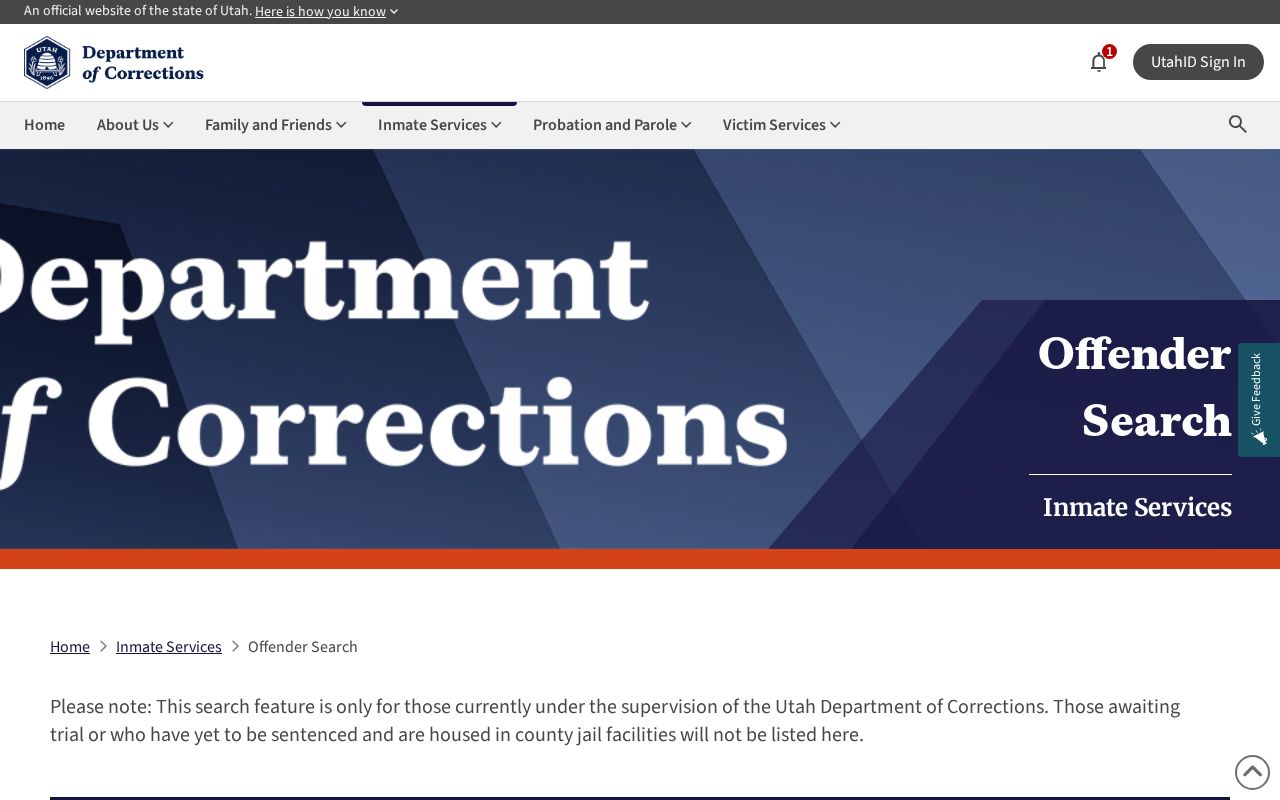
The image supports the correct first step for a state prisoner, but the Board order remains necessary to classify a future or completed release event.
Utah County Jail Good Time
County good time is unusually specific in the Sheriff's published guidance. Good time depends on behavior and program participation, and work in the jail may help. Jail orientation describes usual rates of ten days per month with program participation and five days per month without participation. Those rates are guidance, not an automatic calculation or promise.
For a county sentence, begin with the commitment and credit for time served. Then account for jail-administered good time and any later court modification. Do not simply subtract ten days for each month. Disciplinary issues, participation, multiple cases, a warrant change, another agency hold, or a transfer can move the estimate. Booking expressly says it cannot calculate an inmate's good time.
The Utah County booking process gives the local guidance and release timing context.
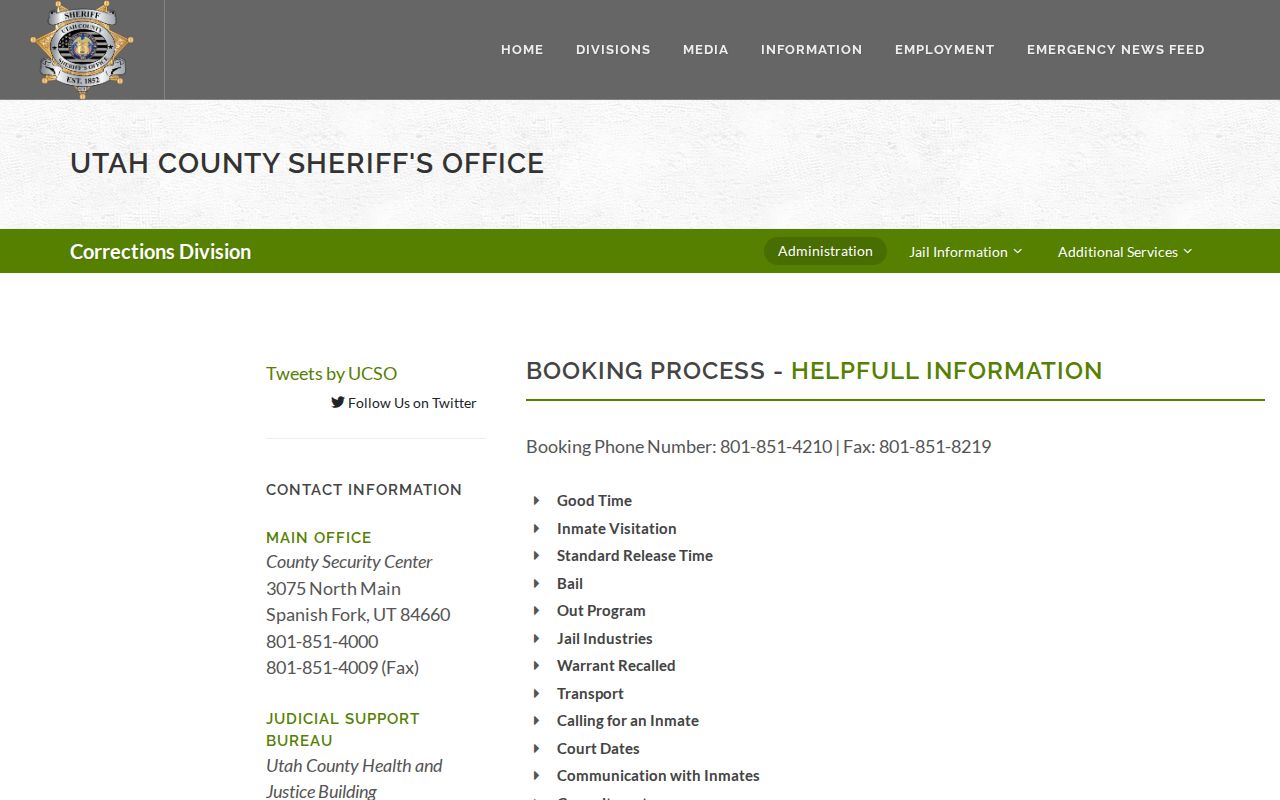
Even after the court paperwork reaches the jail, physical processing can take two to eight hours and pauses during published lockdown periods.
Note: Call 801-851-4200 for a current Utah County jail release-date question instead of doing an unofficial good-time calculation.
Utah County State Earned Time
State earned time is separate from county-jail good time. Utah Code §77-27-5.4 requires an earned-time program. It provides at least four months of incarceration credit for each of up to two qualifying programs approved with UDC and included in the case action plan. The Board may also award additional discretionary time under the statute.
Eligibility has limits. The law lists exclusions that include too little time before an already ordered release, life without parole, service to expiration, no current release date, an unmet release contingency, or an existing termination date. Credit may be forfeited when a rescission hearing becomes necessary. UDC must notify the Board after qualifying completion, but program completion alone does not establish the actual release date.
The UDC earned-time programs page provides the agency explanation.
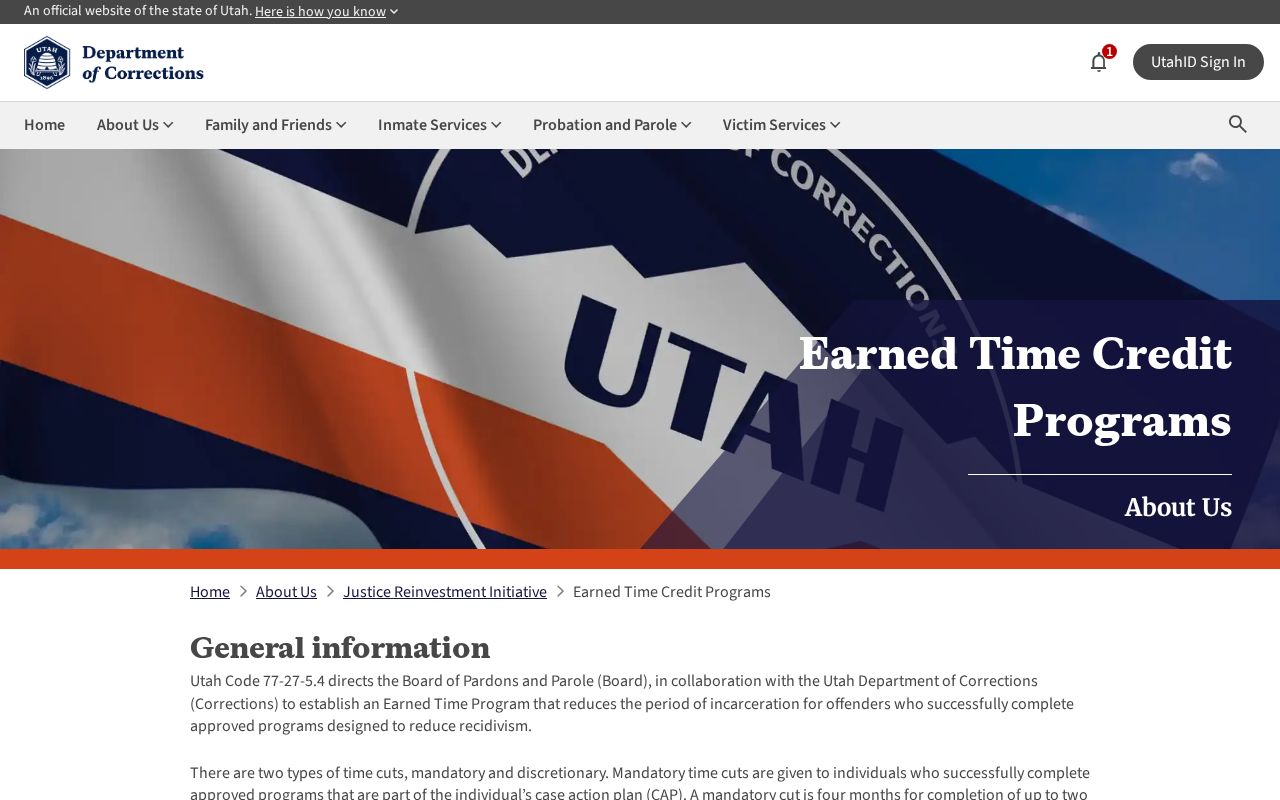
The Board applies or considers the adjustment through its own process, so the latest decision controls the resulting date.
Why Utah County Release Dates Move
A future date reflects the facts and orders known at that point. Any material change can alter it. County and state systems also use different calculations, so an estimate should never be carried from one custodian into another without a fresh check.
| Change | Possible effect | Best confirmation |
|---|---|---|
| Good time or earned time | May move an eligible date after agency or Board action. | Jail calculation or Board order |
| Discipline or rescission | Can reduce credit or remove a previously granted date. | Current jail record or Board decision |
| Hold or detainer | May prevent community release or send the person to another custodian. | Jail release type and receiving agency |
| Court correction | May change the commitment, credit, sentence, or release authority. | Latest signed court order |
| Board redetermination | May revise parole timing or conditions. | Latest downloadable Board order |
| Parole violation | May return a released person to prison and change later dates. | UDC status and violation decision |
For state prison, confirm in three layers: the latest Board decision, current UDC Location/Housing/Release Date-Type, and AP&P or UDC records when needed. For county jail, compare the commitment and docket with the Sheriff's current calculation and any transfer code.
Utah County Has No Blanket 85%
No verified Utah statute or official UDC source establishes a universal rule that all state prisoners serve 85 percent. Utah's indeterminate sentencing structure, Board authority, offense-specific mandatory minimums, credits, and case orders make that shortcut unreliable. Multiplying a maximum term by 0.85 does not produce an official Utah County projected release date.
Under Utah Code §77-27-9, the Board generally may not release an offender before the minimum term unless it uses the statute's mitigating-circumstances route. Specified mandatory-minimum offenses and life-without-parole provisions add further limits. The Board must determine and provide release or parole-termination dates before those events, but eligibility and guideline dates do not create a guaranteed release.
Read the exact sentence, current Board order, and applicable law. Do not import a federal formula or another state's policy into a Utah case.
Utah County Board Release Orders
The Board's decision is the key state-prison date record. Its process weighs the guideline date, presentence report, offense, identified needs, and other relevant material. Guidelines inform the decision, but they do not create a right to release or guarantee a date. A pending decision should remain pending in any description until a signed order appears.
Board event names carry distinct meanings. An Original Hearing can address early release. A Rehearing signals that no release date was granted at the earlier stage. Redetermination can revisit timing. Rescission can remove a date after new conduct or information, while parole-violation proceedings concern someone who was already released under supervision. Termination or expiration is different from the day prison custody ended.
Use the Board's starting-process explanation to understand the decision framework, then retrieve the latest order and its effective date. Compare that order against the current UDC result. When they appear to conflict, ask UDC or the Board for the current governing record rather than selecting whichever date is earlier.
Confirm Utah County Actual Release
VINELink can send a custody-change alert for a specific person when the relevant agency participates. Register from the correct record and choose an offered phone, text, email, or app channel. A transfer alert is not always a release into the community, and data transmission may trail the physical event.
Use the Utah County VINELink check for the specific-person search and registration steps. Then confirm a county release through Sheriff status, release date, and release type. Confirm a state parole event through UDC and the Board order. A federal case belongs in the BOP locator or federal docket, while an immigration handoff requires the ICE custody route.
Actual release processing may also lag authorization. Utah County publishes a standard post-court release time of 3:15 p.m., yet it warns that paperwork can take two to eight hours after Records receives it. Releases are not processed during 5:15 to 6:00 a.m. and 5:15 to 6:00 p.m. lockdowns. The order date, projected time, online status, and physical exit can therefore differ without contradiction.